Pakistan Train Hijacking and Attack
In a shocking incident in Pakistan, the Jaffar Express train was hijacked, leaving over 450 passengers in a hostage situation. Armed men attacked the train while it was traveling from Quetta to Peshawar, resulting in chaos and panic. Tragically, six military personnel lost their lives during the attack, highlighting the ongoing security challenges in the region. As the situation unfolds, the Baloch Liberation Army has claimed responsibility, escalating fears of further violence in an already tense area.
- The Jaffar Express was hijacked, with 450 passengers taken hostage.
- Six military personnel were killed during the attack.
- The Baloch Liberation Army has claimed responsibility for the incident.
- Emergency measures are in place to rescue the hostages and address the situation.
- Local communities are reacting with fear and concern over ongoing violence.
Details Of The Pakistan Train Hijacking Incident
Overview Of The Jaffar Express Route
The Jaffar Express, a key route connecting Quetta and Peshawar, became the focal point of a shocking incident today. Typically, this train journey serves as a vital transportation link across Pakistan. The route passes through diverse terrains, including the troubled Balochistan province, making it susceptible to security risks. The train, comprised of nine coaches, departed from Quetta at 9 AM, carrying approximately 500 passengers and staff.
Initial Reports Of Hostage Situation
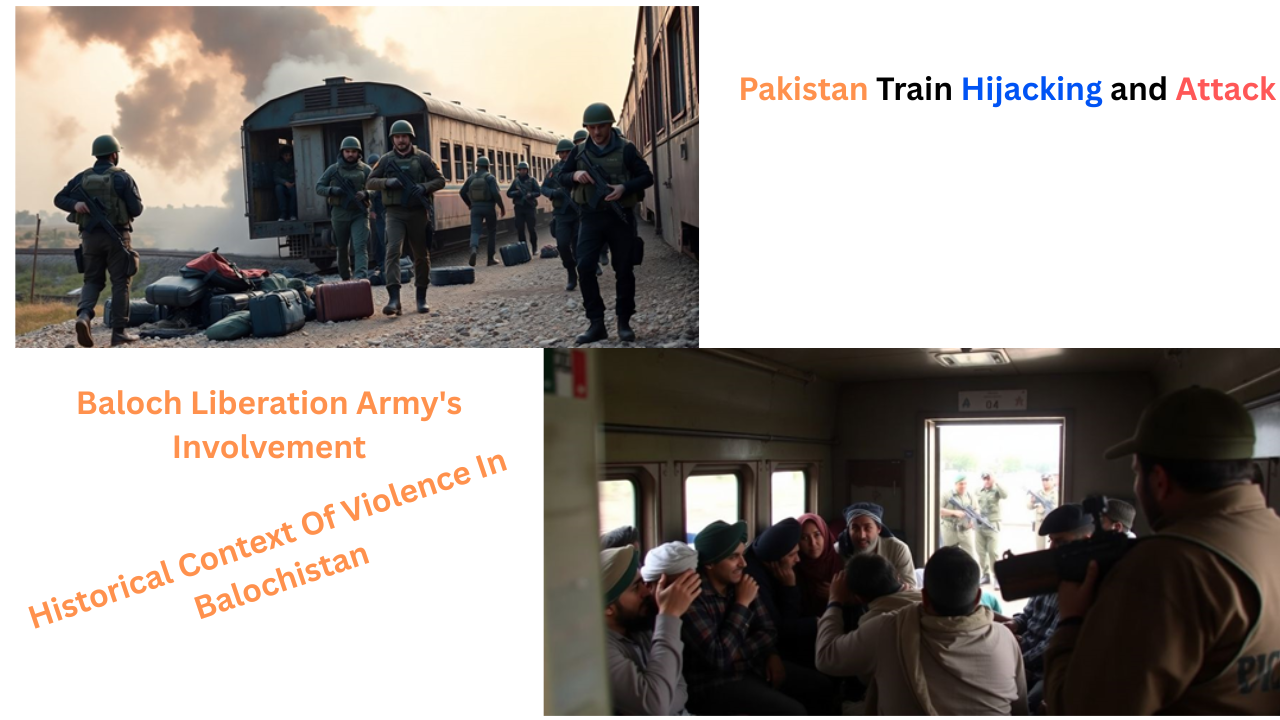
Initial reports painted a grim picture: the Jaffar Express was ambushed between Pehro Kunri and Gadalar. Armed men halted the train inside Tunnel No. 8, immediately creating a hostage situation. Railway officials lost contact with everyone on board, intensifying concerns. The Balochistan government spokesperson, Shahid Rind, confirmed reports of intense firing targeting the train. The rocky terrain complicated efforts to reach the site, delaying immediate assessment and response.
Casualties Among Military Personnel
Early reports indicated that six military personnel were killed during the initial attack. The Baloch Liberation Army (BLA) claimed to have repelled Pakistani military ground assaults following the seizure. The BLA also stated that airstrikes from helicopters and drones continued unabated. The driver of the train sustained severe injuries during the attack. The exact number of casualties is still being determined, but the situation is undoubtedly dire.
The situation is rapidly evolving, and the government has declared an emergency in local hospitals. Rescue efforts are underway, but the challenging terrain and ongoing clashes are hampering progress. The safety of the hostages remains the top priority, and authorities are working to establish communication and secure their release.
Baloch Liberation Army’s Involvement
Claim Of Responsibility
It appears the Baloch Liberation Army (BLA) has claimed responsibility for the train hijacking. This claim underscores the group’s active role in the ongoing conflict within Balochistan. The BLA, which has been fighting for what they consider an independent state, has a history of claiming responsibility for attacks that cause significant damage and loss of life. It’s a pretty bold move, but it fits their pattern.
Previous Attacks By BLA
The BLA has been involved in several attacks over the years. Here are a few examples:
- An attack in Balochistan that resulted in numerous deaths, including those of soldiers.
- An attack on the Jinnah International Airport motorway in Karachi, which led to the death of Chinese nationals and injuries to others.
- A suicide bombing at the Quetta Railway Station, causing many casualties.
The BLA’s history of attacks shows a pattern of targeting both security forces and civilian infrastructure. This pattern raises serious concerns about their operational reach and the potential for future incidents.
Demands Made By The BLA
Following the hijacking, the BLA issued a 48-hour ultimatum. Their main demand is a prisoner exchange. They want the release of Baloch political prisoners, people who have disappeared, and activists. The BLA considers the hostages as prisoners of war and is willing to exchange them for their people. If their demands aren’t met, things could get ugly.
Emergency Response And Rescue Efforts
Local Government’s Immediate Actions
When news of the hijacking broke, the local government scrambled to respond. An emergency was declared at Sibi hospital, and ambulances were dispatched to the area. It’s a race against time, and every minute counts. The railway department also sent additional trains to help with the rescue efforts. The government spokesperson mentioned the difficulty in reaching the site due to the terrain.
Challenges Faced By Rescue Teams
Getting to the site of the hijacking is proving to be a major headache. The rocky terrain is making it tough for rescue teams to reach the stranded passengers. Security sources have said that the challenging terrain is complicating the operation. Plus, there are reports of intense firing, which adds another layer of danger for the rescue operation. It’s a complex situation, and the teams are working under immense pressure.
Status Of Hostages And Communication
As of the latest reports, security officials have killed some terrorists and rescued some passengers. However, establishing clear communication with everyone on board remains a challenge. The government is trying to get in touch with the passengers and staff to assess the situation and provide updates. The focus is on ensuring the safety of the hostages and coordinating efforts to secure their release.
The situation is still developing, and it’s a fluid one. The government is doing everything it can to manage the crisis and bring everyone home safely. The next few hours will be critical.
Impact On Local Communities
Reactions From Balochistan Residents
The train hijacking has understandably sparked a mix of reactions. Fear is definitely a big one, especially for those who rely on train travel for work or visiting family. There’s also anger, directed at both the perpetrators and the government, for not preventing this. Some people are trying to stay strong, hoping this won’t become a regular thing, but it’s hard to ignore the sense of unease that’s settled over the region. It’s hard to say what people are thinking, but it’s probably not good.
Effects On Train Services
Train services in the area have been completely disrupted. It’s not just the Jaffar Express; other routes are affected too. People are stranded, and businesses that depend on the trains for supplies are struggling. Here’s a quick look at the immediate impact:
- Suspension of all long-distance routes.
- Local lines operating with heavy delays.
- Increased security checks causing further disruptions.
The disruption of train services has had a ripple effect, impacting everything from the supply of essential goods to the ability of people to reach medical care. The economic consequences are significant, and the social impact is deeply felt.
Security Measures Implemented
In response to the hijacking, the government has ramped up security measures. There are more police and military personnel at train stations and along the tracks. They’re also using drones and helicopters for surveillance. Whether these measures will be enough to prevent future attacks is the big question.
Here’s a breakdown of the new security protocols:
- Increased patrols along railway lines.
- Mandatory passenger screening at all stations.
- Installation of CCTV cameras on trains and platforms.
- Coordination with local communities for intelligence gathering.
International Reactions To The Attack
Statements From Foreign Governments
The international community has responded to the Jaffar Express hijacking with a mix of condemnation and concern. Many countries have issued statements expressing their strong disapproval of the attack and offering condolences to the families of the victims. Some governments have also reiterated their commitment to supporting Pakistan in its fight against terrorism. It’s a pretty standard response, but the intensity varies depending on the country’s relationship with Pakistan.
Media Coverage Of The Incident
Global media outlets have been covering the hijacking extensively, highlighting the scale of the attack and its potential implications for regional security. News reports have focused on the BLA’s claim of responsibility, the demands made by the group, and the ongoing rescue efforts. The coverage has also raised questions about the security situation in Balochistan and the Pakistani government’s ability to address the underlying causes of the conflict.
Global Concerns Over Security In Pakistan
The hijacking has heightened global concerns about security in Pakistan, particularly in Balochistan. Some countries have issued travel advisories warning their citizens about the risks of traveling to the region. There’s a worry that this incident could embolden other terrorist groups and further destabilize the area. It’s not just about this one train; it’s about the bigger picture.
The international community is watching closely to see how Pakistan responds to this crisis. The effectiveness of the government’s strategy will be crucial in determining whether similar attacks can be prevented in the future.
Here are some of the concerns being voiced:
- The potential for increased terrorist activity.
- The impact on regional stability.
- The safety of foreign nationals in Pakistan.
Historical Context Of Violence In Balochistan
Background On Balochistan Conflict
The history of Balochistan is complex, marked by tribal affiliations and a struggle for autonomy. The region’s incorporation into Pakistan in 1948 remains a contentious issue, with many Baloch feeling it was done against their will. This has fueled decades of insurgency and conflict. The Baloch people, who are the Baloch ethnic minority, claim to face systemic discrimination and exploitation by the central government. The forced accession is a significant event in Baloch history.
Recent Trends In Terrorism
In recent years, there’s been an uptick in terrorist activities, particularly claimed by groups like the Balochistan Liberation Army (BLA). These groups often target government installations, security forces, and even infrastructure projects. The BLA has been fighting for decades, for an independent state of Balochistan. According to reports, the BLA claimed responsibility for 302 attacks in 2024 alone. Here’s a quick look at some recent incidents:
- August 26, 2024: Attacks in Balochistan resulted in 74 deaths, including 14 soldiers.
- October 6, 2024: An attack on Jinnah International Airport’s motorway killed two Chinese nationals.
- November 9, 2024: A suicide bombing at Quetta Railway Station killed 32 people.
The ongoing violence reflects deep-seated grievances and a desire for greater rights and self-determination among the Baloch population. It’s a cycle of attack and response that has proven difficult to break.
Impact On Civilian Life
The constant unrest significantly impacts the daily lives of ordinary people. It disrupts economic activity, limits access to education and healthcare, and creates a climate of fear. Many residents feel caught between the government and militant groups. The Balochistan Liberation Army has intensified in the past six months. The situation is further complicated by the region’s rugged terrain and limited infrastructure, making it difficult to deliver aid and support to those in need.
Future Implications Of The Hijacking
Potential For Further Violence
The hijacking of the Jaffar Express raises serious concerns about the potential for further violence in Balochistan and across Pakistan. The BLA’s demonstrated ability to execute such a complex operation suggests a level of planning and resources that could be used for future attacks. It’s not just about trains; this could embolden other groups or inspire copycat attacks on different targets. The government will need to ramp up its intelligence and security efforts to prevent this. It’s a tense situation, and nobody wants to see a repeat of this.
Government’s Strategy Moving Forward
The government’s response to the hijacking will be critical in shaping the future security landscape. A purely military approach risks alienating the local population and fueling further resentment, potentially driving more people to support groups like the BLA. A more comprehensive strategy is needed, one that combines security measures with efforts to address the underlying grievances of the Baloch people. This could include increased investment in education and infrastructure, as well as greater political representation. It’s a tough balancing act, but it’s essential for long-term stability. The UN Secretary-General has already condemned the attack.
Long-Term Effects On Travel Safety
The hijacking is likely to have long-term effects on travel safety in Pakistan, particularly on train services. People are going to be scared, and that’s understandable. The government will need to implement enhanced security measures, such as increased surveillance, stricter passenger screening, and more armed guards on trains. However, these measures could also lead to delays and inconvenience, potentially discouraging people from using train services. It’s a trade-off between security and convenience, and it’s not an easy one to make. The economic impact on the region could be significant if people stop traveling. Here are some potential measures:
- Increased security personnel on trains
- Enhanced screening at stations
- Investment in surveillance technology
The incident underscores the urgent need for a reassessment of security protocols and a renewed focus on addressing the root causes of unrest in Balochistan. Failure to do so could lead to a further escalation of violence and instability, with devastating consequences for the region and the country as a whole.
A Nation on Edge
The hijacking of the Jaffar Express has sent shockwaves through Pakistan, highlighting the ongoing struggles with militant groups in the region. With over 450 passengers still unaccounted for and the tragic loss of military personnel, the situation remains dire. Authorities are scrambling to respond, but the rocky terrain and the threat of further violence complicate rescue efforts. As the nation watches and waits, the hope is that a peaceful resolution can be found before more lives are lost. This incident serves as a stark reminder of the challenges facing Pakistan and the urgent need for effective measures to ensure the safety of its citizens.
Frequently Asked Questions
What happened during the Pakistan train hijacking?
A passenger train named Jaffar Express was attacked in Balochistan, Pakistan. Armed men fired on the train, injuring the driver and taking over 450 passengers hostage.
Who is responsible for the hijacking?
The Baloch Liberation Army (BLA) has claimed responsibility for the attack, stating that they have control over the train and the hostages.
What are the demands made by the BLA?
The BLA has issued a 48-hour ultimatum, demanding the release of Baloch political prisoners. They threatened to execute hostages if their demands are not met.
What is being done to rescue the hostages?
Local authorities have declared an emergency and are working to establish contact with the hostages. Rescue teams are facing challenges due to the difficult terrain.
How has the local community reacted to the attack?
Residents of Balochistan are shocked and concerned about the safety of train services. The incident has raised fears about security in the region.
What are the international reactions to this incident?
Foreign governments have expressed concern over the attack, and media outlets worldwide are covering the situation, highlighting ongoing security issues in Pakistan.